
|
| Navigation<> |
|
Putting the touch into touchscreensA force-feedback system devised by Ian Summers expoits pressure-sensitive nerves, rather than stretch-sensitive ones. It is able to simulate the feel of a range of flexible materials, including silk, hessian and fur. Find out more.
|
Exeter astronomer wins international award for planet discoveryDr Jenny Patience of the University of Exeter was part of an international team that captured the first-ever image of multiple planets orbiting a star other than our own. Find out more.
|
Exeter astronomer wins international award for planet discoveryDr Jenny Patience of the University of Exeter was part of an international team that captured the first-ever image of multiple planets orbiting a star other than our own. Find out more.
|
|
|
|
|
|
An obscure species of beetle has shown how brilliant white paper could be produced in a completely new way. The team has taken inspiration from the shell of the Cyphochilus beetle to understand how to produce a new kind of white coating for paper. Find out more.
|
A researcher from the School of Physics has helped to find a way to use doughnut shaped by-products of quantum dots to slow and even freeze light. The research opens up a wide range of possibilities from reliable and effective light based computing to the possibility of ‘slow glass’. Find out more.
|
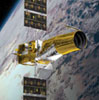
The CoRoT satellite has discovered a planet only twice as large as the
Earth orbiting a star slightly smaller than the Sun. It is the
smallest extrasolar planet (planet outside our solar system) whose
radius has ever been measured. Find out more.
|
 Exeter astronomers help set astronomy record
 Funding boosts astronomy research
 Shedding new light on brain disease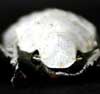
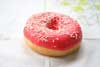 Quantum doughnuts slow and freeze light at will
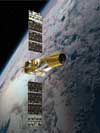 European team finds smallest transiting extrasolar planet ever